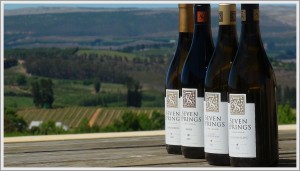
Chardonnay 2011

Tasting Notes

The wine is fresh and fragrant, with a delicate balance between crisp citrus, tropical fruits and subtle toasted oak. It is elegant with a crisp minerality stemming from the terroir and the cooling influences of the nearby Atlantic Ocean only 8km away.  A great food match with rich chicken and pasta dishes.

Bronze Sticker


Decanter World Wine Awards: Bronze 2014


Technical Analysis 

Alcohol: 14.35%
Total Acidity: 6.4 g/l
pH: 3.46
Residual Sugar: 2.7 g/l

Harvested by hand: 16 February 2011
Bottled: March 2012
Total Production: 4,380 bottles (750ml)
Ageing Potential: 5-7 years


Harvest Report

The start of the growing season was cool, with overcast days and regular showers. None of the customary gale force winds prevailed early in the season and the vines were able to flourish, but the southeaster was out in force throughout December. Little rain was recorded from mid-November, and with unrelenting heat from January onwards, Seven Springs relied on delicate and calibrated irrigation. The ripening period  was dry and warm.

The Seven Springs Chardonnay was fermented and aged in second and third fill, 300L barrels of which 20% was American oak and 80% French. These older barrels and absence of malolactic fermentation aids expression of the Chardonnay fruit. Fermentation was a combination of 40% wild and 60% inoculated with commercial yeast in the different barrels. After fermentation the wine was left to mature on the lees for 11 months to aid in the development of the creamy palate.

Planted in 2007, on South facing slopes at 220 meters elevation. The oaked Chardonnay is made from clones CY96, CY548 and P3, all of which have characters of citrus, peach and tropical fruits and have a very low yield.

Reviews

Tom Cannavan July 2014

This cuvée was fermented in second- and third-fill, 300-litre barrels, 20% American and 80% French, using a combination of wild and commercial yeasts. It aged a further 11 months on the lees in barrel. There is more overt oak influence than on the 2010, with toast and a whisper of Jack Daniels, all nicely nutty with a rounded lime and apple fruitiness beneath. On the palate it is a big wine with over 14% alcohol, but the acidity tempers that, and there is no sense of tropical über ripeness. There is good fruit sweetness through the mid-palate, and the oak does not dominate the finish, it adds only a gentle spice and buttery toast to the clean, mineral-etched flavours. A very different wine from the unoaked 2012, and delicious.

buy now


South African #Braaiday Friday – Wine Passionista

Living in London one thing is certain – you can never count on the weather.  So we plan our picnics in the park and our summer cookouts and keep our fingers crossed it isn’t a washout.  Sometimes we get lucky and others, well…we don’t let a little rain dampen our spirits.  Nowhere was this more evident than at a brilliant lunch hosted recently by the Wines of South Africa (WOSA).

The invitation was to a #braaiday lunch (complete with hashtag for those avid Twitterers amongst us!) and said:

Read the full story on The Wine Passionista

Chardonnay 2010

 Description


 Review
Some of our Chardonnay reviews
Glenda Van Blerk  –  CapeTownWineBlog
BottlePlatePillow.com – Wine Farm Search engine (Facebook)
Michael Olivier  –  Food & Wine Guru (Page 10)
Miguel Chan  –  Sommelier
Richard Saxton  –  The Graped Crusader
E-Vines
Simon Woods  –  Woods Wine
Joanna Simon


 Video Review

Winter bottling, brrrrr.

July 5th 2012 started out much the same way any winters day in South Africa would, cold and dark. The weather however was not enough to keep me in bed, because we had some wines to bottle; namely the 2012 Sauvignon Blanc and Un-oaked Chardonnay and 2011 Syrah. I jumped out of bed, ready for the day, the final step, from picking the grapes to pressing and waiting for them to age in either barrel or tank until they were perfect.

Syrah capsules


The Syrah was picked last year, 2011, in March, during a heat wave, and made the familiar trip to the cellar, where it  was  crushed and pumped to the tank for fermentation. The 2011 was our second year of making Syrah, the vines were  a year  older and gave me more structure and balance in the wine. The grapes were pressed and barrelled down to  spend the next  13 months in aged French oak.

Shovelling the Sauvignon Blanc grapes out of tank and into the press


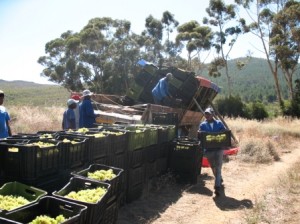
February 2012 saw the harvest of the Sauvignon Blanc and  Unoaked  Chardonnay. The first wine Seven Springs made  was a  Sauvvy and so it holds    a special place for me.  So after  VERY  carefully picking grapes of only the  best  quality, the  fruit was  transported to the cellar. The Sauvvy was pressed  and  left to  ferment in stainless steel tanks but the Un-Oaked  Chardonnay  had  a much more difficult time leaving the  vineyards . Once  loaded on the truck it  shifted precariously when we tried to drive out of the vineyard and we had to                                                                                        repack everything in the scorching sun.

I like to call it the “Almost disaster”


Thankfully Chardonnay can take a bit more of a beating than Sauvvy and it finally made it to the cellar to enjoy  the same love and attention as the Sauvvy, fermenting at cool temperatures and left to age on the lees for 4 months.

Well after all that, you can see why I breathed such a sigh of relief when my babies where finally making it into the  bottle where they are safe. On the day of bottling the air was cold and crisp and thankfully clear with no rain.  Perfect! A team of great girls came to help with the bottling and they worked with the bottled wine with such  respect, I had nothing to worry about.


The team of girls that made the day go like clockwork

Once the wine is in the bottle the capsules go on and the goodness gets sealed in, YUM!

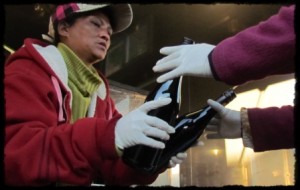
Wise hands carefully handling the bottled wine.


25,000 bottles and 12 hours later we were tired, but more importantly, we were done and  off for a well deserved dinner and a good nights’ sleep.

Me, just keeping an eye on everything, especially the wine.

Riana van der Merwe, Winemaker

Olives and jam from Seven Springs

When we are not harvesting, we play!  – a blog by Hetta. Whilst this is not true, some things, like making  jam or pickling your own olives, may feel like it!
During the Harvest 2012, we saved some Chardonnay, Sauvignon Blanc and Pinot Noir grapes, to make jam.  In South Africa (in Afrikaans) we call it “Korrelkonfyt”. 
Korrelkonfyt is wonderful with some home made bread when you have a fish-braai (barbeque).
 

                                    Danish Blue, crackers and homemade jam!  A winner. Mmmmmm…. Lovely!


Olive-picking at Seven Springs Vineyard.
 This is the first time we have used the salt-curing process to preserve our olives.  It is a less time consuming method of preserving olives so let’s see what they tatse like
.
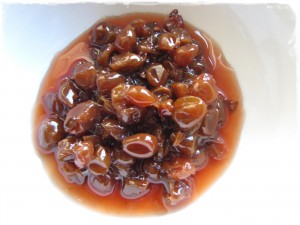
After some time in the salt, the olives look like small dried prunes.
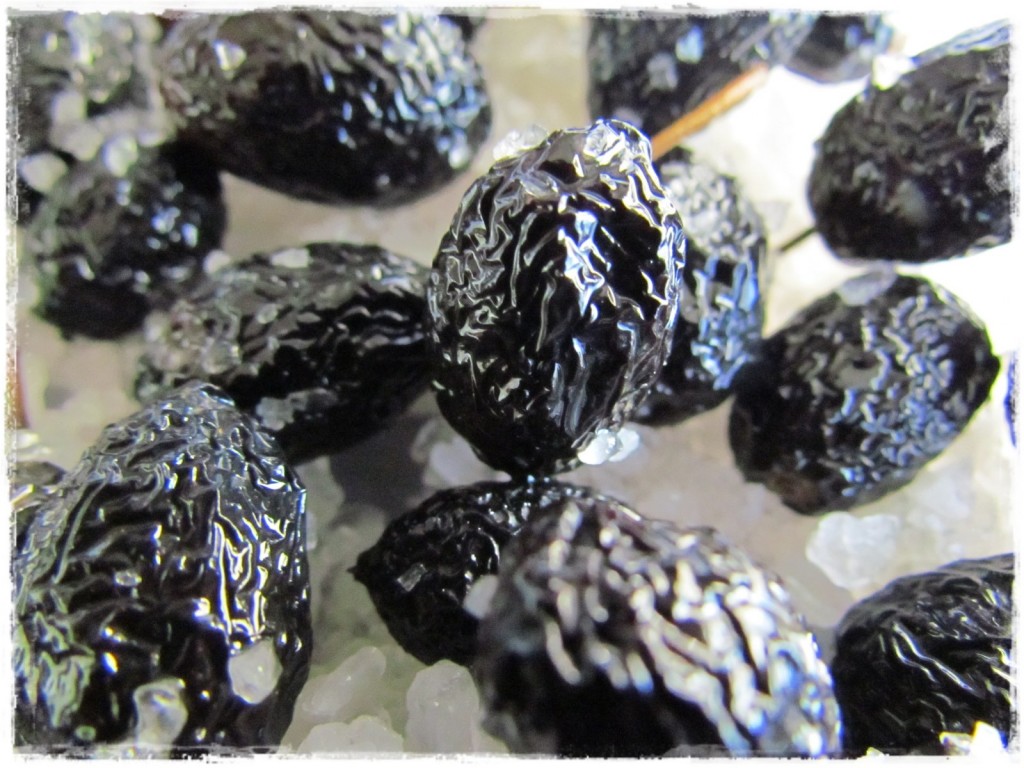
Our first salt-cured olives bottled with a couple of chillies.
The olives are rinsed, buckets washed and new salt solution added weekly, until we are satisfied that they are ready to go into the brine.
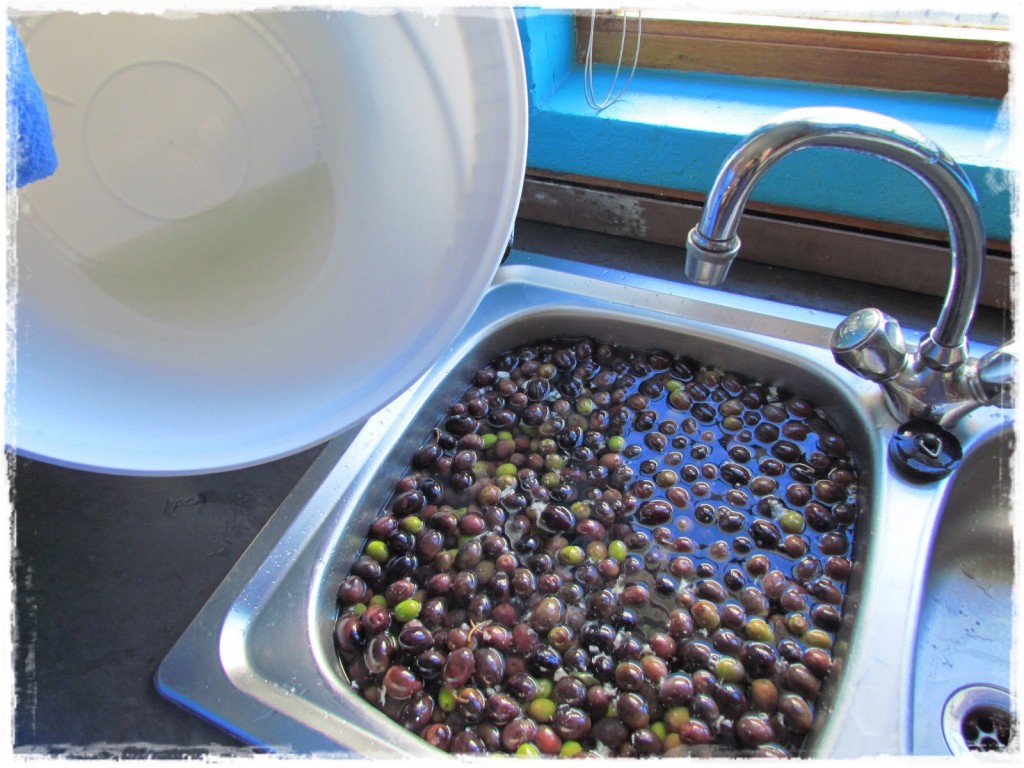
Waiting to be bottled in a week or so.

A super-sticky affair!

 Harvest time is a busy-busy-busy time… Sometimes super-stressed!  But  certainly always  super-busy and super-sticky!  (The super-sticky part came  from Daniela Shelton, who was  helping for a few days during the harvest)


Have you ever noticed, there’s always a dog…. Every vineyard has a dog, sleeping somewhere in a corner, wagging a tail or… checking on the quality.  This one belongs to our vineyard manager, Peter, and his name is Truffles.

Dani and Riana tweeting during a break!


Super-sticky feet.


     Dani helping to make sure only the  best ends up in the bottle.


 It’s good to see the grapes coming into the cellar and turning into wine, then…  later, much later, getting bottled.


       The mobile bottling unit turns up to bottle our 2011 Chardonnay after it has spent 12 months in oak barrels.


Bottles being filled.

                And capped.


Caps on, ready to rest!

     Riana’s baby!  But she’s always keeping a watching eye on production.

     After the super-sticky start, we now have super-clean bottles filled with super-delicious Chardonnay!


For all of you who haven’t experienced a harvest yet, you don’t know what you are missing!

It is also super-exciting!

Protected: Pinot Noir Harvest 2012…. continued…

This content is password-protected. To view it, please enter the password below.

Seven Springs Harvest 2012


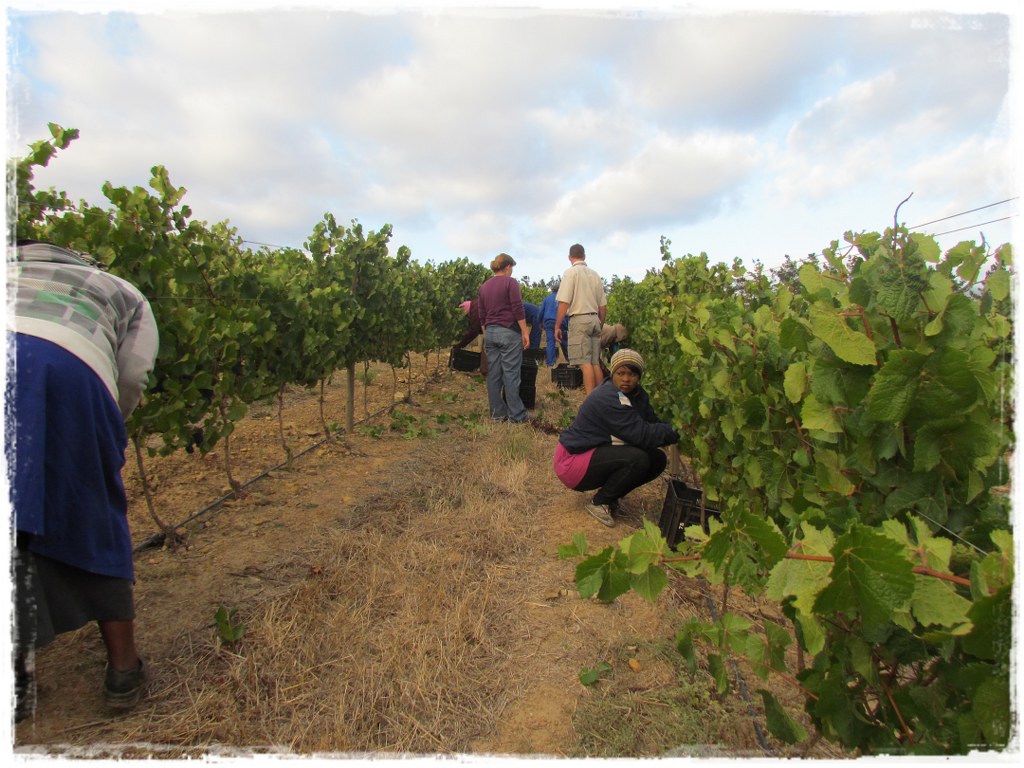
    Valentine’s Day? Yes, but also and most important, harvest time at 7 Springs                  Vineyard, where our grapes get tender loving care, as you would treat your                  Valentine!

We have 4 Pinot Noir clones of which two were harvested today, clones 667 and 777. These two will give the fresh fruit component to the wine.


Clones 459 and 115 will be picked as and when they reach their full ripeness and they will make out the structural component to our Pinot Noir.

                                Everybody ready for action!


Our Pinot Noir vines are now in their 4th year,  still very young, and as a result the volumes are still small, so the grapes harvested today will ferment together in the same tank.

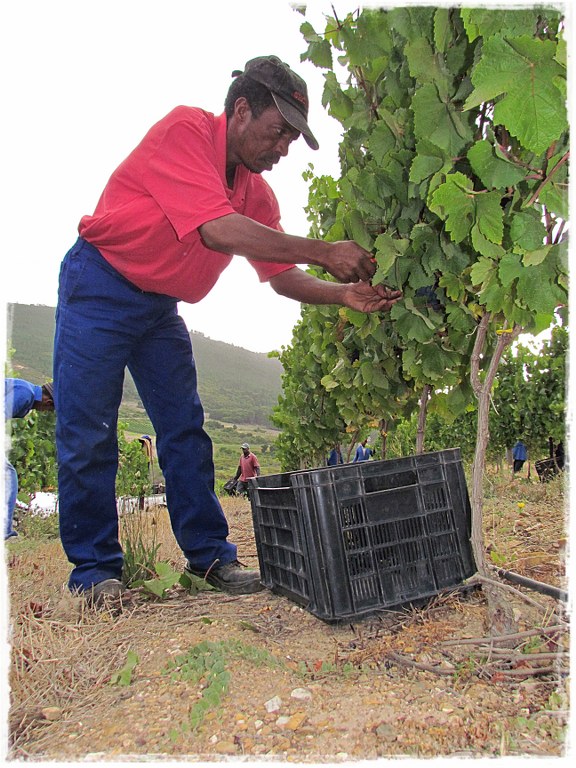
Some experienced hands working here, good care is taken not to squash any grapes!


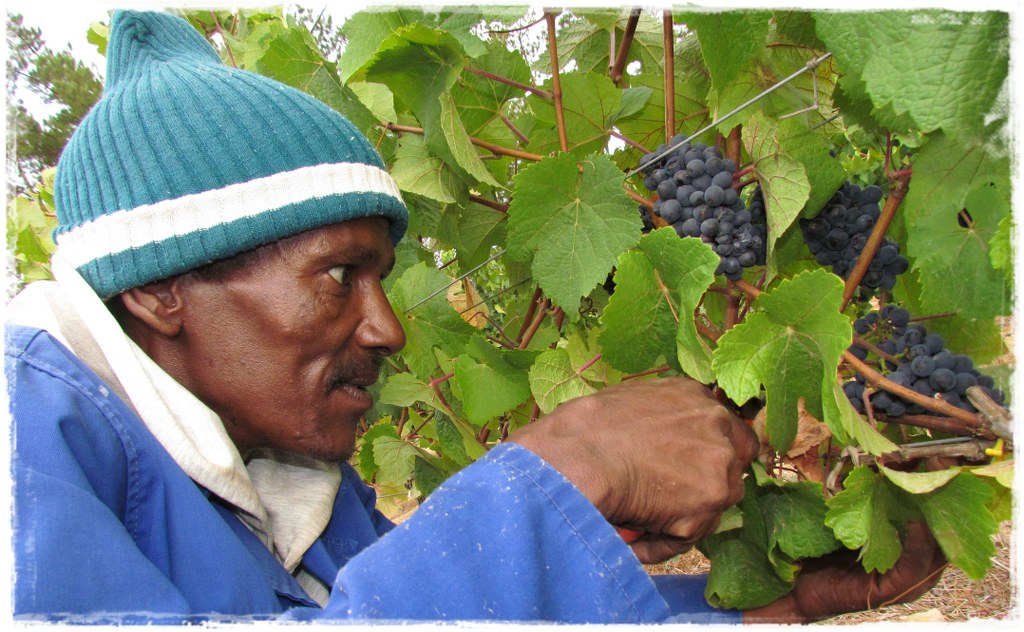
Our grape pickers enjoy what they are doing and they have a real passion for this job!


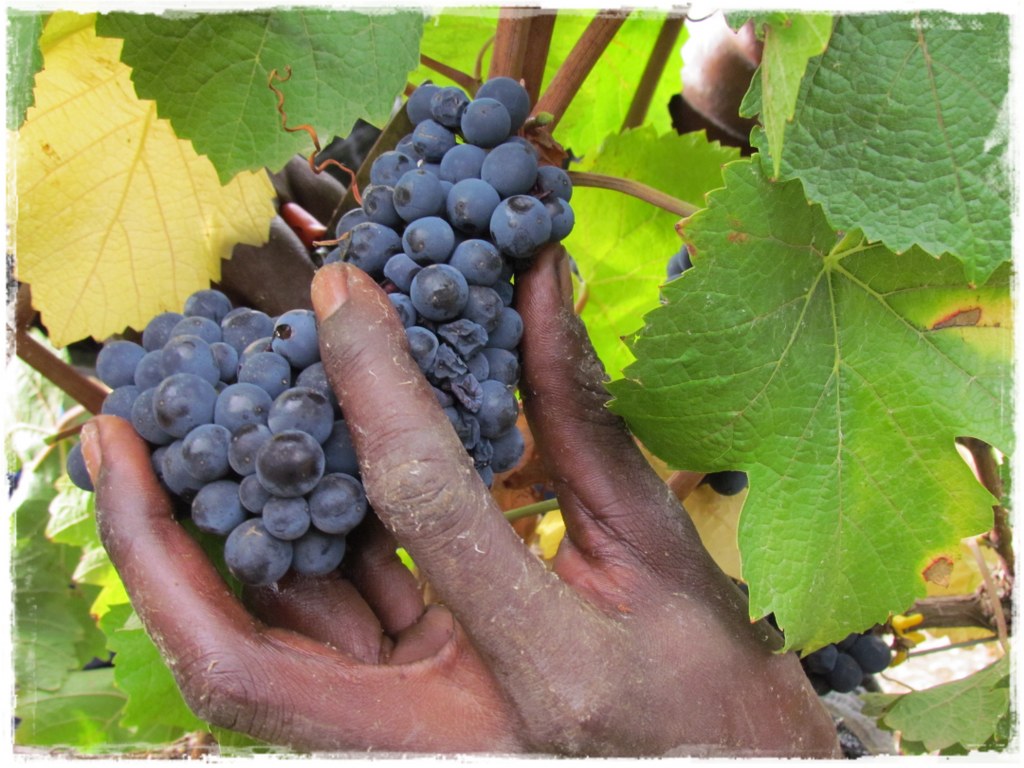
Another perfect bunch!

The grapes are transported to the winery in the same crates they were gently harvested into. The gentler the grapes get handled the less breakage there is of the berries. This way we make sure we get the best results from our wonderful grapes.


Watch this space and see how our grapes transform into wine!

New technology in our vineyards

We have recently introduced Neutron Moisture Guages into our vineyards at Seven Springs. What this will do is to allow us to measure very accurately the ground moisture in all parts of our vineyards. Thus we can irrigate our vines at the optimum time and apply the exact amount of water required to maintain healthy plant growth. Our water comes from boreholes drilled into Shaws Mountain behind our vineyards, using underground streams. Accurate measurement of the ground moisture it will allow us to use our water resources responsibly ensuring increased fruit quality. We are working closely with Bokkeveld Besproeiing ( http://www.irrinet.net/ ) who have developed the software programmes for measuring soil moisture. The company is jointly owned by Piet van der Merwe, who is father of our winemaker Riana, and Jac Le Roux, with Piet being responsible for running the business in South Africa. The company specialises in irrigation scheduling for fruit, citrus, perrenials, lavendar, olives, table grapes and, of course, wine grapes. Accurate measurements and targeted irrigation (we can apply water to individual parts of our vineyards) will allow us to produce the optimum size and quality of grape which in turn will allow us to make first class wines. We are on a quest to produce some of the best wines in South Africa and this is one way we can help manage that process.

Seven Springs the video

This super video, taken in our vineyards and surrounds, has just gone live on YouTube. The video was made by the talented Charles Lourens of http://www.bottleplatepillow.com . We are really pleased as the video truly conveys what we at Seven Springs are all about. Thank you Charles, you have done us proud.